lingvo.wikisort.org - Language
Tahltan, Tāłtān, also called Tałtan ẕāke ("Tahltan people language"), dah dẕāhge ("our language") or didene keh ("this people’s way") is a poorly documented Northern Athabaskan language historically spoken by the Tahltan people (also "Nahanni") who live in northern British Columbia around Telegraph Creek, Dease Lake, and Iskut. Tahltan is a critically endangered language.[3] Several linguists classify Tahltan as a dialect of the same language as Tagish and Kaska (Krauss and Golla 1981, Mithun 1999).
| Tahltan | |
|---|---|
| Tałtan ẕāke, dah dẕāhge, didene keh | |
| Native to | Canada |
| Ethnicity | 2,460 Tahltan people (2014, FPCC)[1] |
Native speakers | 95 (2016)[2] |
Language family | Dené–Yeniseian?
|
| Language codes | |
| ISO 639-3 | tht |
| Glottolog | tahl1239 |
| ELP | Tāłtān (Tahltan) |
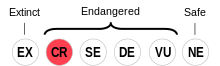 Tahltan is classified as Critically Endangered by the UNESCO Atlas of the World's Languages in Danger | |
Language revitalization
As of May 2013, language researcher Dr. Judy Thompson estimated that there are 30 Tahltan speakers. A new Language and Culture office is exploring evening "language immersion" classes, a Master-Apprentice program, and creating a "language nest" for teaching the language to young children. Scholarships are planned for part-time language learners.[4]
Lacking written documentation, it was unclear to the language revitalization coordinator how to teach the language, and how to explain the grammar. "After a year of study, Oscar Dennis says he, along with Reginald and Ryan Dennis, have finally cracked the code on Tahltan language’s fundamental patterns."[5] As a Dene language, like Navajo, Tahltan has “encoded” patterns in which small pieces are added to words to create meaning. "Dr. Gregory Anderson from the Living Tongues Institute visited our territory, and was so impressed with the team’s work that he said he 'couldn’t improve upon it.'"[5]
A digital archive of Tahltan recordings, located "at the Tahltan Language Revitalization Offices in Dease Lake, Iskut and Telegraph Creek" can be used on iPods.[5]
Phonology
Consonants
There are 47 consonant sounds:[6]
| Labial | Dental | Inter- dental |
Post- alveolar |
Velar | Uvular | Glottal | |||||
|---|---|---|---|---|---|---|---|---|---|---|---|
| plain | sibilant | lateral | plain | labial | |||||||
| Nasal | plain | m | n | ||||||||
| voiceless | n̥ | ||||||||||
| glottalized | nʼ | ||||||||||
| Plosive/ Affricate |
voiced | b | |||||||||
| unaspirated | t | ts | tɬ | tθ | tʃ | k | kʷ | q | |||
| aspirated | tʰ | tsʰ | tɬʰ | tθʰ | tʃʰ | kʰ | kʷʰ | qʰ | |||
| ejective | tʼ | tsʼ | tɬʼ | tθʼ | tʃʼ | kʼ | kʼʷ | qʼ | ʔ | ||
| Fricative | voiceless | s | ɬ | θ | ʃ[lower-alpha 1] | x | xʷ | χ | h | ||
| voiced | z | ɮ | ð | ʒ[lower-alpha 1] | ɣ | ɣʷ | ʁ | ||||
| Approximant | j | w | |||||||||
- Phonemes /ʃ/ and /ʒ/ are very limited in use and may or may not be phonemes.
Vowels
| Front | Central | Back | ||
|---|---|---|---|---|
| Close | i | u | ||
| ɪ | ʊ | |||
| Mid | ɛ | ə | ʌ | o |
| Open | ɑ | |||
 | This section is empty. You can help by adding to it. (February 2017) |
Phonological processes
- Vowel flattening.
- Consonant harmony
- Vowel nasalization
- Vowel laxing
References
- "Tahitan". Ethnologue (18 ed.). 2015.
- "Census Profile, 2016 Census". Statistics Canada. Retrieved 13 December 2020.
- Alderete, John forthcoming: On tone length in Tahltan (Northern Athabaskan). In: Hargus, Sharon and Keren Rice (eds.): Athabaskan Prosody. Amsterdam/Philadelphia: John Benjamins.
- "Learn Tahltan language, save our culture". Tahltan Central Council. 2013-05-03. Retrieved 2013-05-14.
- "Mystery of Tahltan language "code" revealed". Tahltan Central Council. 2013-05-03. Retrieved 2013-05-14.
- Alderete, John, Blenkiron, Amber (2014). Tahltan grammar synopsis (PDF). Simon Fraser University.
- Cook, Eung-Do. (1972). Stress and Related Rules in Tahltan. International Journal of American Linguistics, 38, 231-233.
- Gafos, Adamantios. (1999). The Articulatory Basis of Locality in Phonology. New York: Garland Publishing, Inc. ISBN 0-8153-3286-6. (Revised version of the author's doctoral dissertation, Johns Hopkins University).
- Hardwick, Margaret F. (1984). Tahltan Phonology and Morphology. (Unpublished M.A. thesis, University of Toronto, Ontario).
- Krauss, Michael E. and Victor Golla. 1981. Northern Athapaskan Languages. In Handbook of North American Indians, Vol. 17: Languages. Ives Goddard, ed. pp. 67–85. Washington DC: Smithsonian Institution Press.
- Mithun, Marianne. (1999). The Languages of Native North America. Cambridge: Cambridge University Press. ISBN 0-521-23228-7 (hbk); ISBN 0-521-29875-X.
- Nater, Hank. (1989). Some Comments on the Phonology of Tahltan. International Journal of American Linguistics, 55, 25-42.
- Poser, William J. (2003). The Status of Documentation for British Columbia Native Languages. Yinka Dene Language Institute Technical Report (No. 2). Vanderhoof, British Columbia: Yinka Dene Language Institute.
- Shaw, Patricia. (1991). Consonant Harmony Systems: The Special Status of Coronal Harmony. In Paradis, C. & Prunet, J.-F. (Eds.), Phonetics and Phonology 2, the Special Status of Coronals: Internal and External Evidence (pp. 125–155). London: Academic Press.
External links
- Tahltan Central Council language page
- OLAC resources in and about the Tahltan language
- Alderete, John, Tanya Bob and Thomas McIlwraith. An annotated bibliography of Tahltan language materials
 Languages of Canada Languages of Canada | |||||||||||||||
|---|---|---|---|---|---|---|---|---|---|---|---|---|---|---|---|
| Official languages |
| ||||||||||||||
| Indigenous languages |
| ||||||||||||||
| Pidgins, creoles and mixed |
| ||||||||||||||
| Immigrant languages |
| ||||||||||||||
| Sign languages | |||||||||||||||
На других языках
- [en] Tahltan language
[fr] Tahltan
Le tahltan est une langue parlée par une nation autochtone qui se trouve dans le nord-ouest de la Colombie-Britannique dans les environs de Telegraph Creek, Dease Lake et Iskut (en).[it] Lingua tahltan
Il tahltan è una lingua parlata dal popolo Tahltan, che vive nel nord-ovest della Columbia Britannica (Canada), nella zona dello Spatsizi Plateau.[ru] Талтан
Талтан — северо-атабаскский язык, на котором говорят индейцы талтан (англ.) (также нахани), проживающие в Юконе, Канада. Язык относится к атабаскской группе языковой семьи на-дене. Исходя из данных статистической службы Канады носителей языка в 2006 году было 450 человек, по данным 2016 года — 105 человек. Некоторые лингвисты считают талтанский язык группой диалектов.Другой контент может иметь иную лицензию. Перед использованием материалов сайта WikiSort.org внимательно изучите правила лицензирования конкретных элементов наполнения сайта.
WikiSort.org - проект по пересортировке и дополнению контента Википедии