lingvo.wikisort.org - Language
Tseku (Tzuku) is a Tibetic language of Tibet. Tournadre (2013) classifies it with Khams Tibetan.
| Tseku | |
|---|---|
| Native to | China |
| Region | Tibet |
Native speakers | 19,000 (ca. 2000)[1] |
Language family | Sino-Tibetan
|
| Language codes | |
| ISO 639-3 | tsk |
| Glottolog | tsek1238 |
References
- Tseku at Ethnologue (18th ed., 2015) (subscription required)
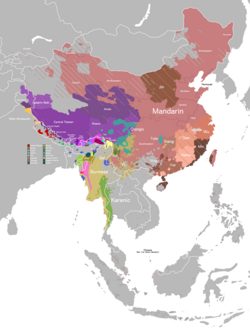
Sino-Tibetan branches | |||||
|---|---|---|---|---|---|
| Western Himalayas (Himachal, Uttarakhand, Nepal, Sikkim) |
|  | |||
| Eastern Himalayas (Tibet, Bhutan, Arunachal) | |||||
| Myanmar and Indo-Burmese border |
| ||||
| East and Southeast Asia |
| ||||
| Dubious (possible isolates) (Arunachal) |
| ||||
| Proposed groupings |
| ||||
| Proto-languages |
| ||||
Italics indicates single languages that are also considered to be separate branches. | |||||
 | This Sino-Tibetan languages-related article is a stub. You can help Wikipedia by expanding it. |
На других языках
- [en] Tseku language
[ru] Цеку
Цеку (тзуку) — язык этнической группы тибетцев цеку[1], относящийся к тибетской группе бодских языков[2]; отдельные исследователи сближают его с камским тибетским языком[3]. На нём говорят в Тибетском автономном районе Китая[1]. По данным отдельных источников, народность цеку проживает также в Непале и Бутане[4].Текст в блоке "Читать" взят с сайта "Википедия" и доступен по лицензии Creative Commons Attribution-ShareAlike; в отдельных случаях могут действовать дополнительные условия.
Другой контент может иметь иную лицензию. Перед использованием материалов сайта WikiSort.org внимательно изучите правила лицензирования конкретных элементов наполнения сайта.
Другой контент может иметь иную лицензию. Перед использованием материалов сайта WikiSort.org внимательно изучите правила лицензирования конкретных элементов наполнения сайта.
2019-2026
WikiSort.org - проект по пересортировке и дополнению контента Википедии
WikiSort.org - проект по пересортировке и дополнению контента Википедии